
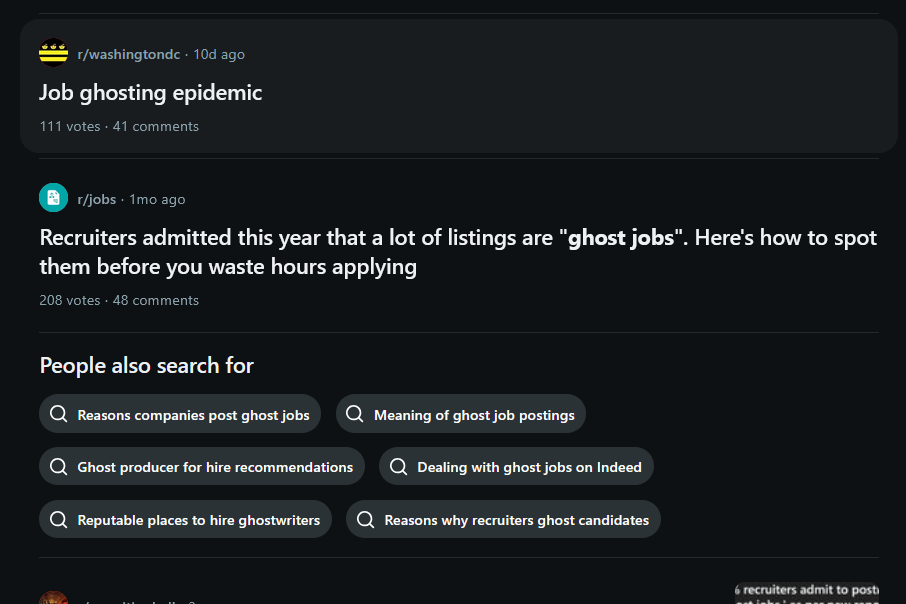
There’s a specific kind of exhaustion that comes from applying to forty jobs and hearing nothing back from any of them. No rejection. Just silence. After enough of this, a thought creeps in: what if some of these jobs were never real to begin with?
That thought turns out to be correct more often than most people realise.
What ghost jobs actually are
A ghost job is a listing that stays live with no real intention behind it, at least not in the near term. Companies post them for a handful of reasons that have nothing to do with an actual vacancy.
Some are building a talent pipeline. Some are performing growth for investors or the public, a wall of open positions signals momentum even when hiring has quietly stalled.
Others are required to post externally to satisfy visa sponsorship rules, even though they already have someone in mind.
Whatever the reason, the effect on the applicant is identical. Time spent tailoring a resume and writing a cover letter, sent into a role that was closed before the application was ever opened.
Some of what looks broken isn’t an accident. It’s designed that way, and once you see them, it’s hard not to notice.
I came across a job post that asked applicants to complete a “test” as part of the application: google a specific keyword, find the company’s listing, and note where it ranked. On the surface, this reads like a harmless screening step.
The company was ranked first for that keyword, and having a background in SEO, I recognised what the exercise actually was. Every applicant who completed it was a real human, searching that exact term, clicking through to that exact listing. Multiplied across however many people applied, that’s a steady stream of genuine engagement signals feeding straight into the company’s search ranking. The test was free labour disguised as a hiring step, and it worked because job seekers have every incentive to comply without asking what the task is really for.
That’s a relatively subtle version of the pattern. Other companies are far less subtle about it. Unpaid “test tasks” that amount to real, usable work, a logo concept, a piece of copy, a marketing plan, are common enough that most job seekers have run into at least one. The task gets framed as an evaluation of skill, but the output has commercial value the company keeps regardless of whether anyone gets hired. Run this across enough applicants and a company can effectively source free work under the cover of a hiring process, with no obligation to pay any of them.
None of this shows up in conversations about ghost jobs or broken boards, because it isn’t about a listing being fake. The listing is real, the role might even be real, but the process wrapped around it has been quietly repurposed to extract value from people who have no leverage to say no. That’s a harder problem than noisy job boards, because it hides inside something that looks legitimate on its face.
Why this is happening more now
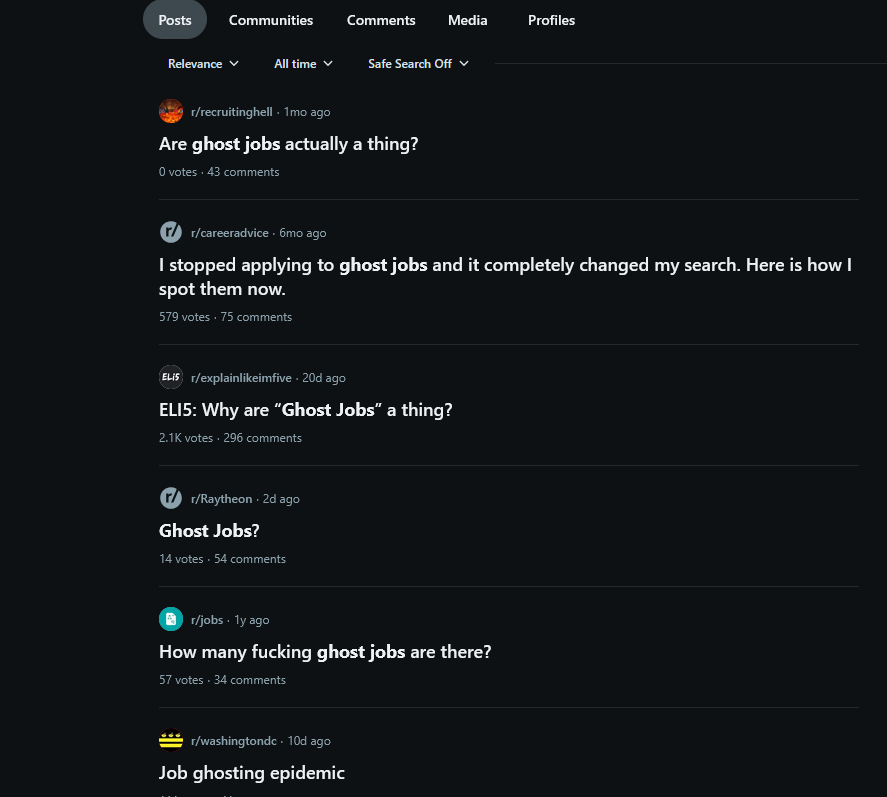
None of this is new, but it has become more common, and there are a few reasons for that. Layoff waves across the past few years created a strange incentive: companies that were cutting staff still wanted to look like they were hiring, so postings stayed up as a kind of hiring theatre. AI tools have made it trivial to generate job descriptions at scale, so the sheer volume of listings has grown without a matching growth in actual openings. And applicant tracking systems make it essentially free to leave a posting live indefinitely, there’s no cost to the company for a stale listing sitting on a job board for six months.
The result is a job market that looks far more active than it actually is.
How to navigate it anyway
There are signs worth watching for. Vague job descriptions, ones that could describe five different roles at five different companies, are another signal. So is total silence for weeks after applying, not a guarantee the job was fake, but a pattern worth noticing.
The more reliable approach tends to sidestep boards altogether. Direct outreach to people at a company, even a short message expressing interest, often gets further than a formal application into a black box.
Networking still works, not because it’s a nicer way to find a job, but because it routes around the exact system that’s causing the problem.
Closing thought
And, full disclosure, the reason I’m writing this at length is that I’m currently unemployed and have had plenty of time to notice all of it. So if you happen to be running ads and your landing page needs fixing, or your WordPress site could use someone who actually understands both the design and the technical side, I’m right here, ghost job free.